
Are last century’s drug policy misdeeds redeemed by increasing access in the present?
The mechanism of action in the human brain that leads to chemical dependency doesn’t discriminate. More drugs mean more drugs. More drugs means more addiction. Anyone who has seen or experienced addiction take over — which is most Americans — understands that all boats rise in this flood.
Don’t we have a collective duty, an obligation to each other as fellow human beings, to focus on stemming the flood instead of adding more boats?
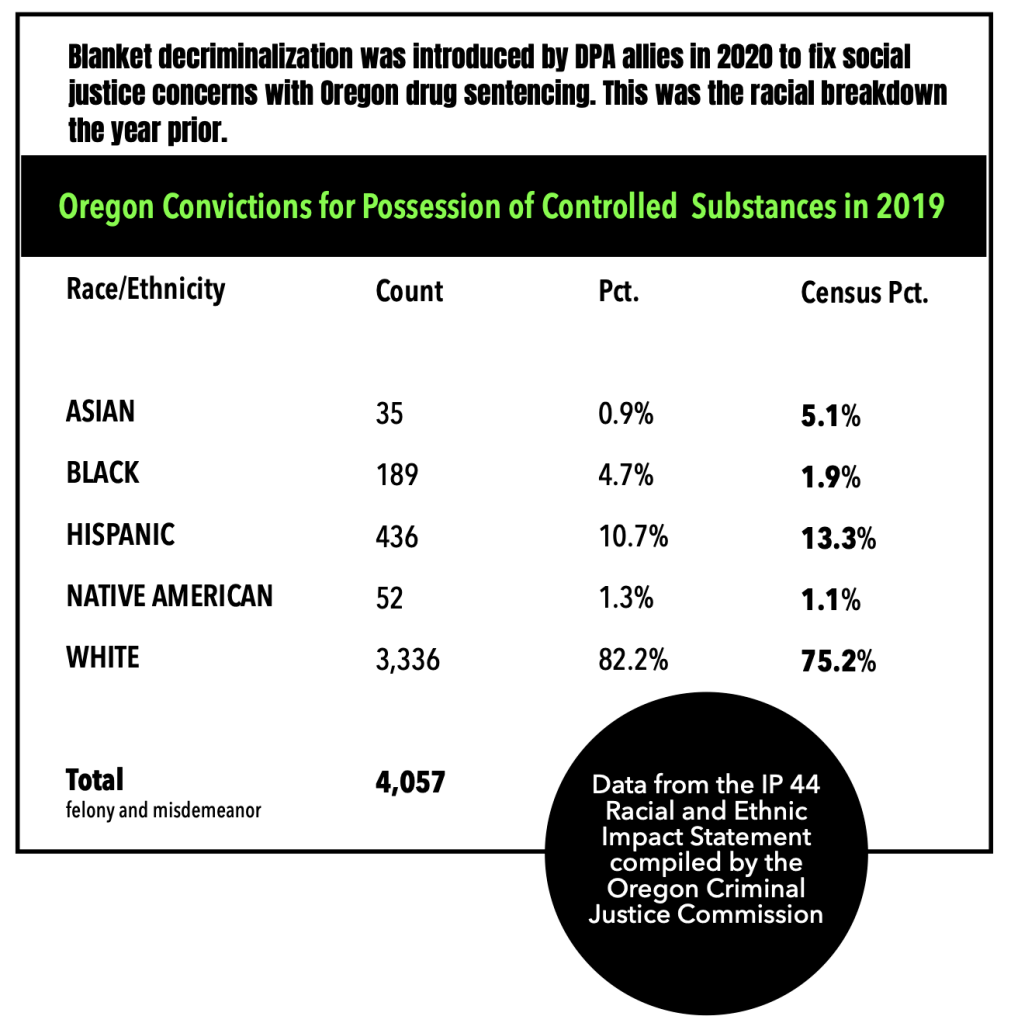
State drug laws are uneven and passing laws in one state based on the excesses of another is not harm reduction. In 2019, the year preceding decriminalization, the state of Oregon convicted a TOTAL of 4,057 people.
Were Oregon drug laws in 2020 a “racist system”?
The chart stats are copied from the Racial and Ethnic Impact Statement required by the state. Oregon drug convictions in 2019 were overwhelmingly imposed on white defendants.
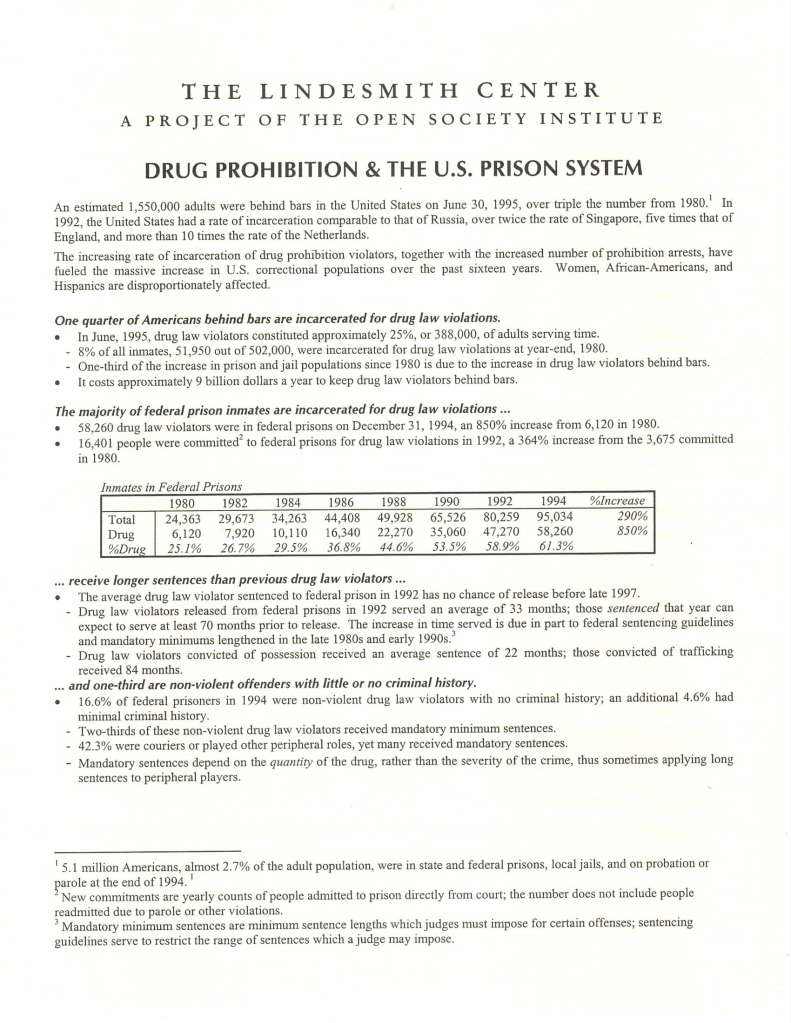
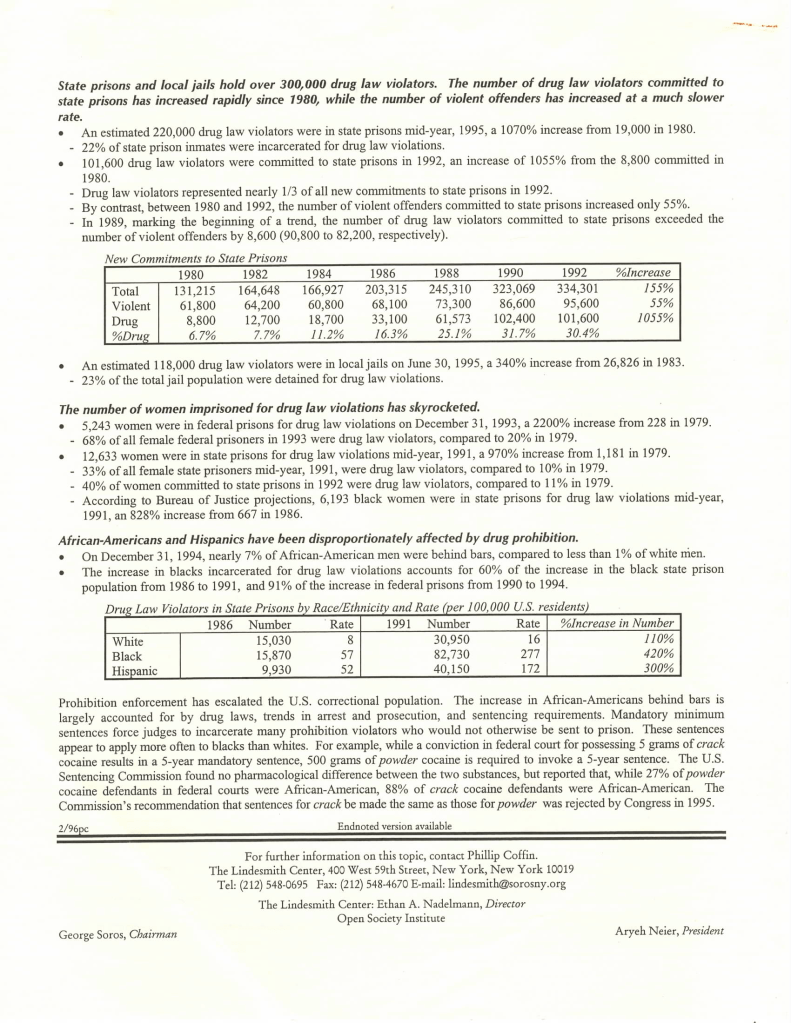
Compare this to the data compiled below by the Lindesmith Center in 1996.
Between 1980 and 1994, the federal prison rate for drug crimes increased by 850%. Over a 6 year period from 1986 – 1991, state prison rates saw Black drug law violators increase by 420%, Hispanic by 300% compared to a 110% increase for white drug law violators.
In the 1980s and 90s the American Criminal Justice System commodified punishing drug users, emphasizing the criminality of nonwhite drug users.
This was a racist system
 demainstay.com